Hair-stroke camouflage · HEADS Eyebrows Makati
Scalp Microblading
Scalp microblading draws fine, hair-like strokes of pigment into the skin where hair has thinned — a receding hairline, the temples, a widening part or a small scar. The strokes sit between the hairs you still have, so the area reads as fuller. It does not grow hair. It changes how thinning looks, and the result is only as good as the design, the hand that draws it and the way it heals. At HEADS in Makati, scalp microblading is done by Ms. Sepideh Farjad, our microblading artist. This page explains all three, including the risks.
What scalp microblading is — and what it is not
Microblading uses a small hand tool tipped with a row of very fine needles. Each pass places pigment in a short line that imitates a single hair. Health regulators treat microblading as a form of tattooing: the pigment sits in the skin and fades over time — it does not wash off.
It is easy to confuse with two close relatives:
- Scalp micropigmentation (SMP) is done with a machine and places tiny dots that imitate hair follicles. It is the usual choice for a shaved or very short look and for larger bald areas.
- Eyebrow microblading uses the same stroke technique on the brows. Scalp skin is usually oilier, and oily skin holds pigment less predictably, so strokes can soften or fade sooner. How the brow version works at HEADS: what to expect from eyebrow microblading.
One thing it is not: a hair-loss treatment. It does not regrow hair and it does not stop thinning — medical sources are clear on that. If your hair loss is still active, have the cause checked by a dermatologist first; the strokes stay where they are while the hair around them keeps changing. Our hair-loss guide is a good place to start.
Who it suits — and who should wait
A good fit if there is still hair in and around the area: a thinner hairline or temples, a part that has widened, a small scar inside hair-bearing skin. The strokes need real hair to blend into.
Usually better solved another way if the area is completely bald, if you keep your hair shaved and want an even all-over look (SMP is built for that), or if you want real volume across the top of the head — that is what a hair topper or a hair system does and pigment cannot.
Not now, or only with your doctor's go-ahead: pregnancy or breastfeeding; a tendency to keloid scars; psoriasis, eczema, folliculitis, a wound or an infection on the area; acne tablets (isotretinoin) now or recently; blood thinners or medicines that suppress the immune system; diabetes that is not well controlled; and cancer treatment — ask your oncology team, who usually advise waiting until treatment is over. Never stop a prescribed medicine to have a cosmetic treatment.
How an appointment runs
- Consultation and scalp check with Ms. Sepideh Farjad. We look at your hair, your skin and the area you want to soften, ask about your health and medicines, and tell you honestly whether strokes, a topper, a hair system — or nothing at all — is the better route. The consultation costs ₱500 and is credited in full if you go ahead.
- Design first. The hairline or the area is drawn on the skin and you check it in the mirror from several angles. No pigment goes in until you have agreed to the design.
- Numbing and strokes. A numbing cream is usually applied first. The strokes are then placed one by one, angled the way your own hair grows.
- Healing. The first two weeks are described below — this is the part you control.
- Touch-up. Once the first round has healed, a second session refreshes strokes that faded and adjusts density. Your specialist sets the date after seeing how your skin held the pigment.
Healing: what the first weeks look like
Fresh strokes look darker and sharper than they will when healed, and the skin can be pink or red at first. Within the first one to two weeks the treated skin flakes lightly; the strokes can look patchy or lighter for a while before they settle.
Do not pick or scratch. Flakes that come off early take pigment with them — the most common reason for uneven, patchy strokes.
You get written aftercare. The usual points: keep the area dry and do not wash it until we say so; avoid heavy exercise, sweating, steam, swimming and strong sun for the first days; no hair colouring for several weeks; protect the area from sun afterwards. Published advice on exact timings differs, so follow your own aftercare sheet over anything you read online — including this page.
How long it lasts
Microblading is semi-permanent: the strokes fade gradually. For scalp strokes, published estimates are around a year; oily skin, frequent washing and sun shorten that, and touch-ups keep the look fresh. Fading does not mean the pigment disappears completely — some can remain in the skin for years.
Risks — the honest list
Anything that places pigment in skin carries risks, and you should hear them before you book:
- Infection, mainly from unsterile tools or contaminated pigment.
- Allergic reactions to pigment — rare, and they can appear even years later.
- Granulomas (small lumps) and keloid scars in people prone to them.
- Blurring, spreading or a colour shift over time, for example a bluish or greenish tone.
- Flare-ups of psoriasis, vitiligo or lichen planus in the treated skin.
- Rarely, swelling or burning during an MRI scan — tell the radiology team you have pigment; it is not a reason to skip a scan.
- Removal is difficult: lasers can lighten pigment over several sessions, but complete removal is not guaranteed.
In the Philippines, tattoo and skin-piercing shops fall under the Code on Sanitation, which requires a sanitary permit and sterilised instruments. Whichever studio you choose — including us — ask how the tools are sterilised, whether needles are single-use and which pigment is used.
Scalp microblading, SMP, a topper or a hair system?
| Option | Best for | What you get |
|---|---|---|
| Scalp microblading | A thinner hairline, temples or part, small scars — with hair still present | Hair-like strokes so the scalp shows less — ₱75,000 at HEADS; touch-ups as they fade |
| Scalp micropigmentation (SMP) | Shaved or very short hair, larger bald areas | Tiny dots that imitate follicles — a close-cropped look |
| Hair topper | Thinning on top, when you want real volume | Real human hair over the thin area, custom toppers from ₱45,000 |
| Men's hair system | Advanced hair loss in men | A full head of hair on a fine base, from ₱65,000 |
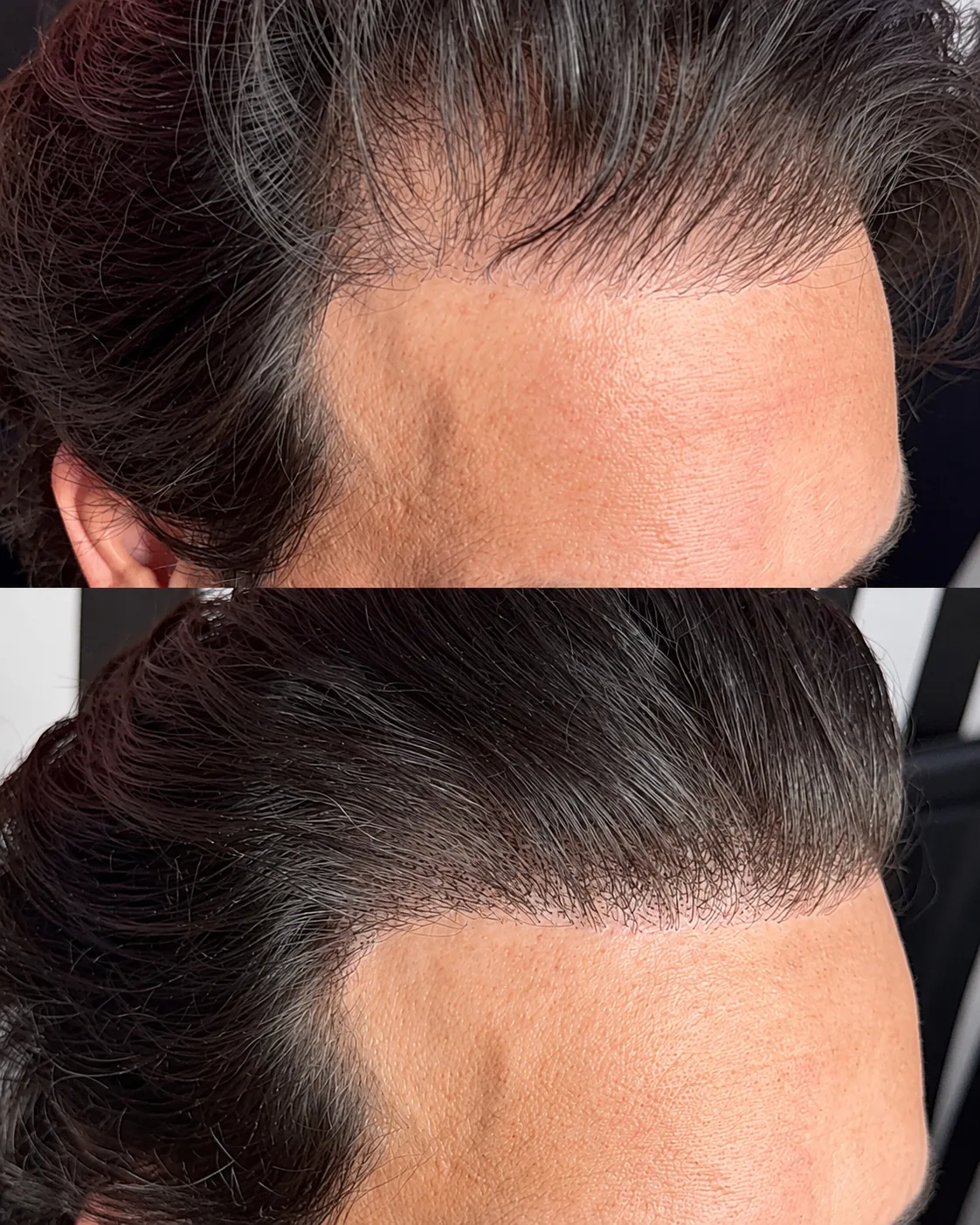
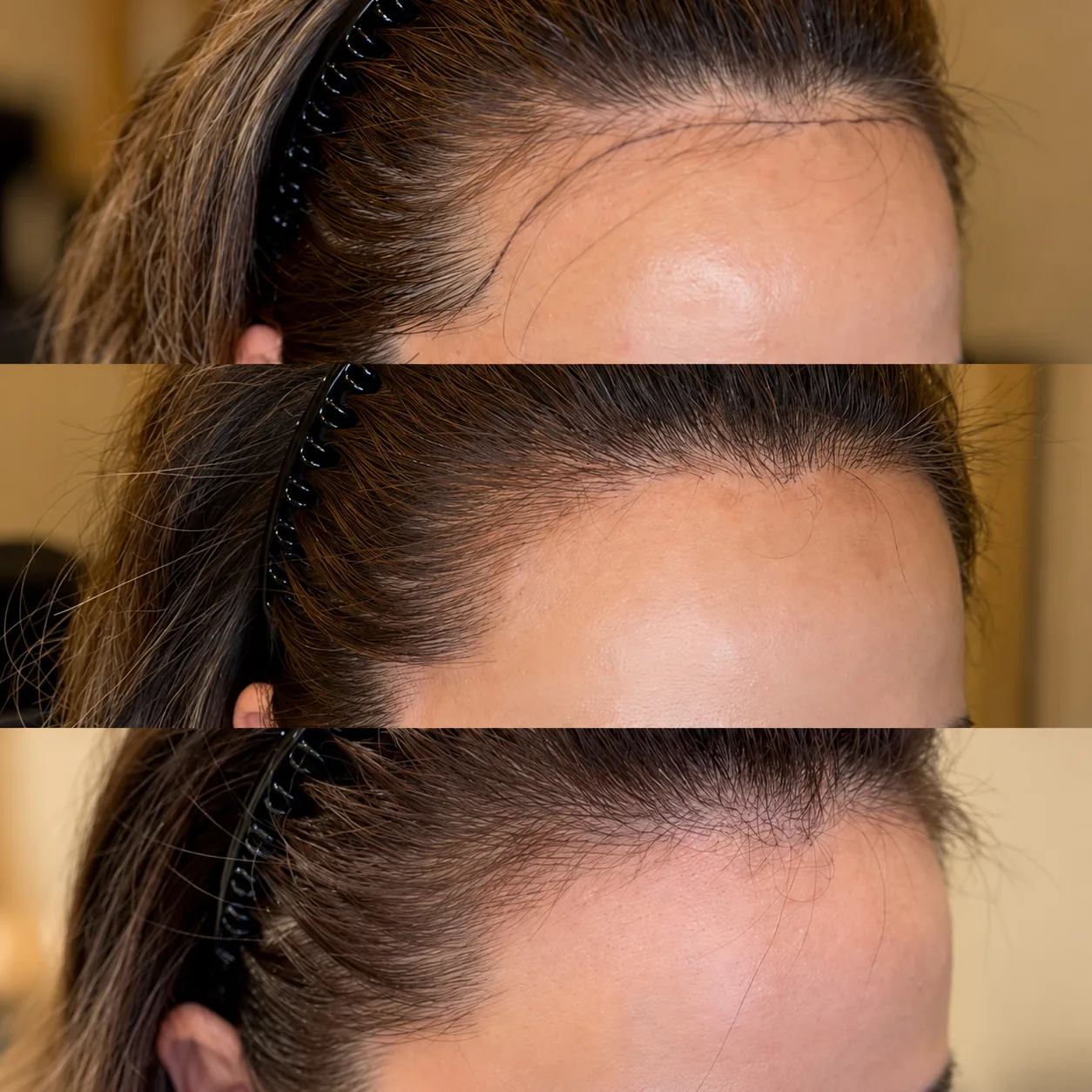
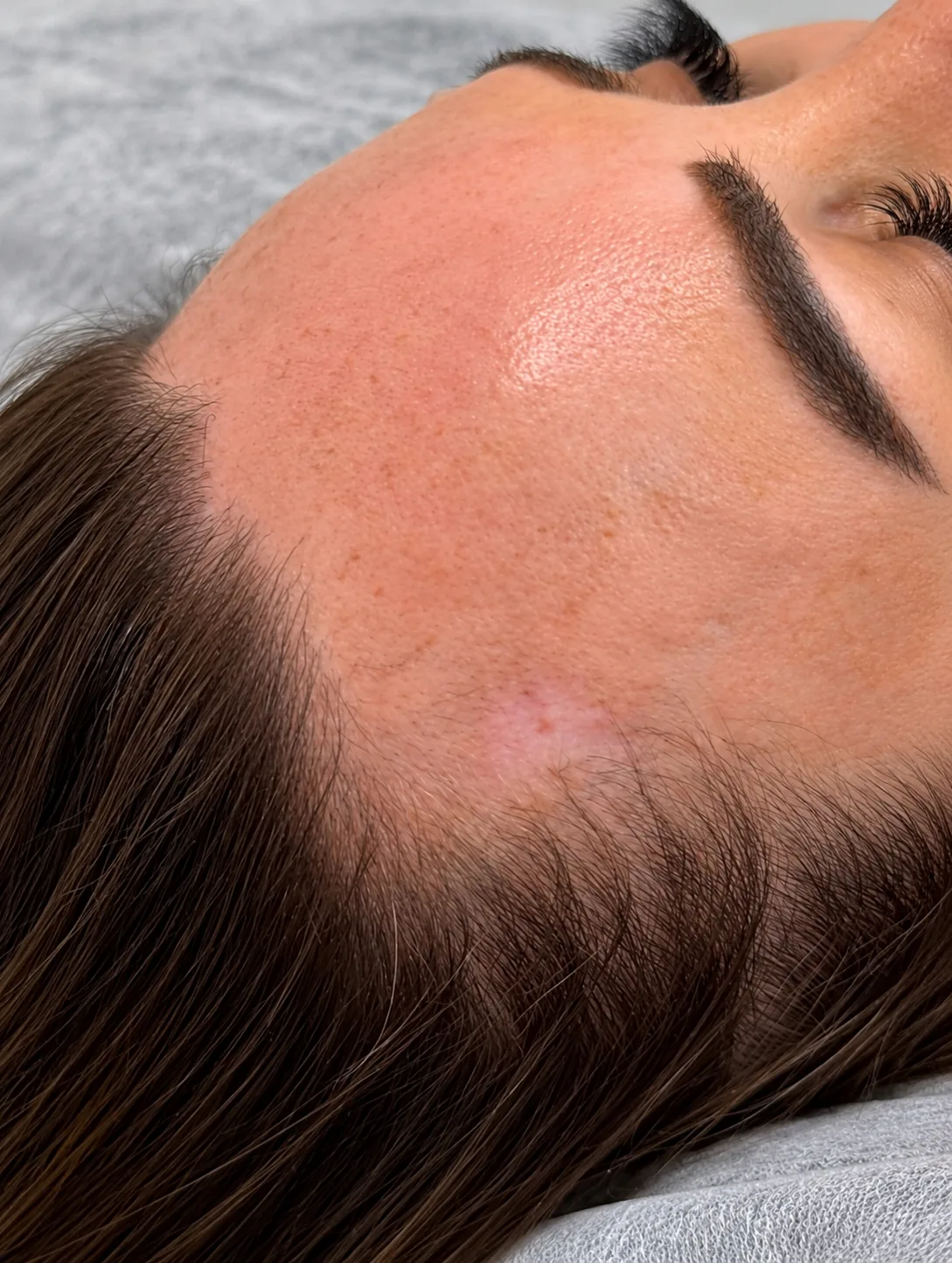
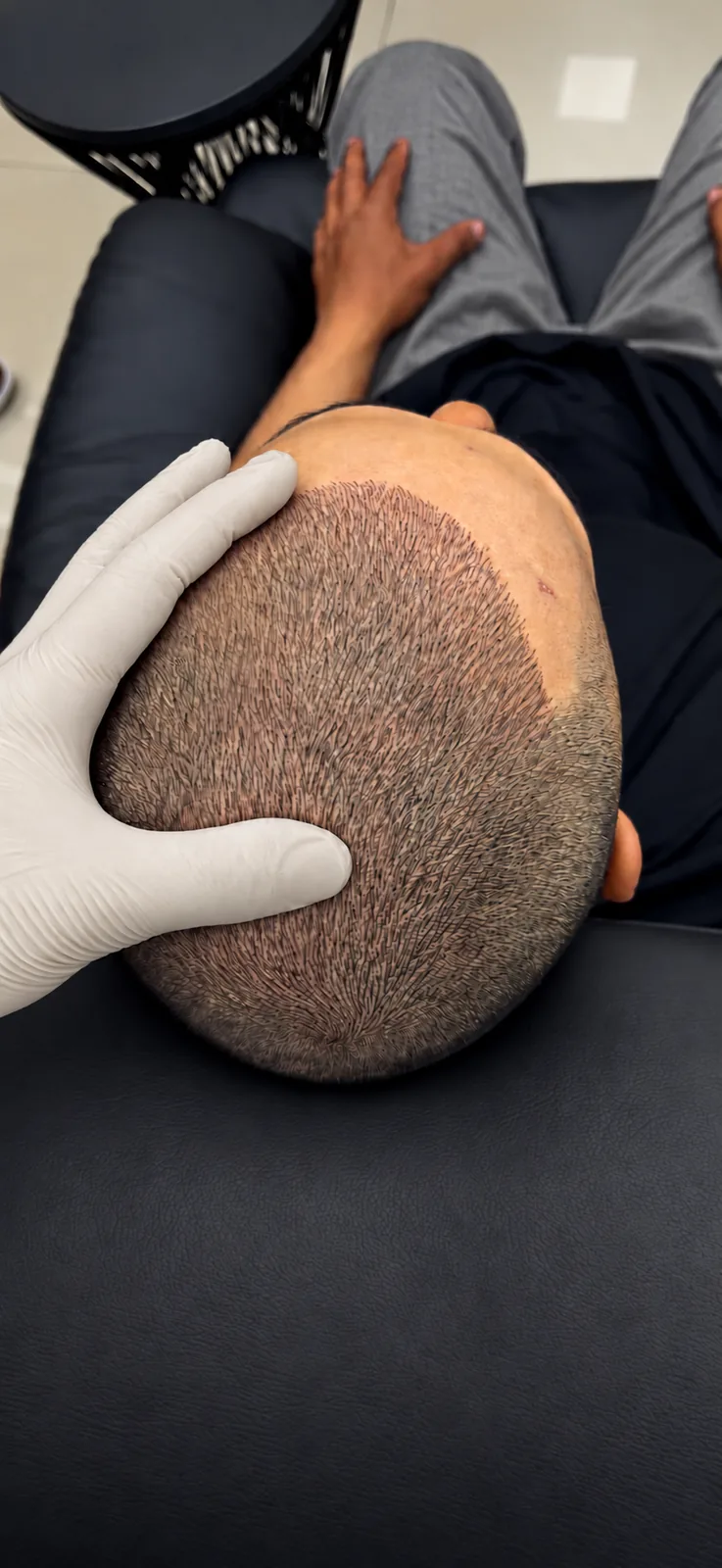
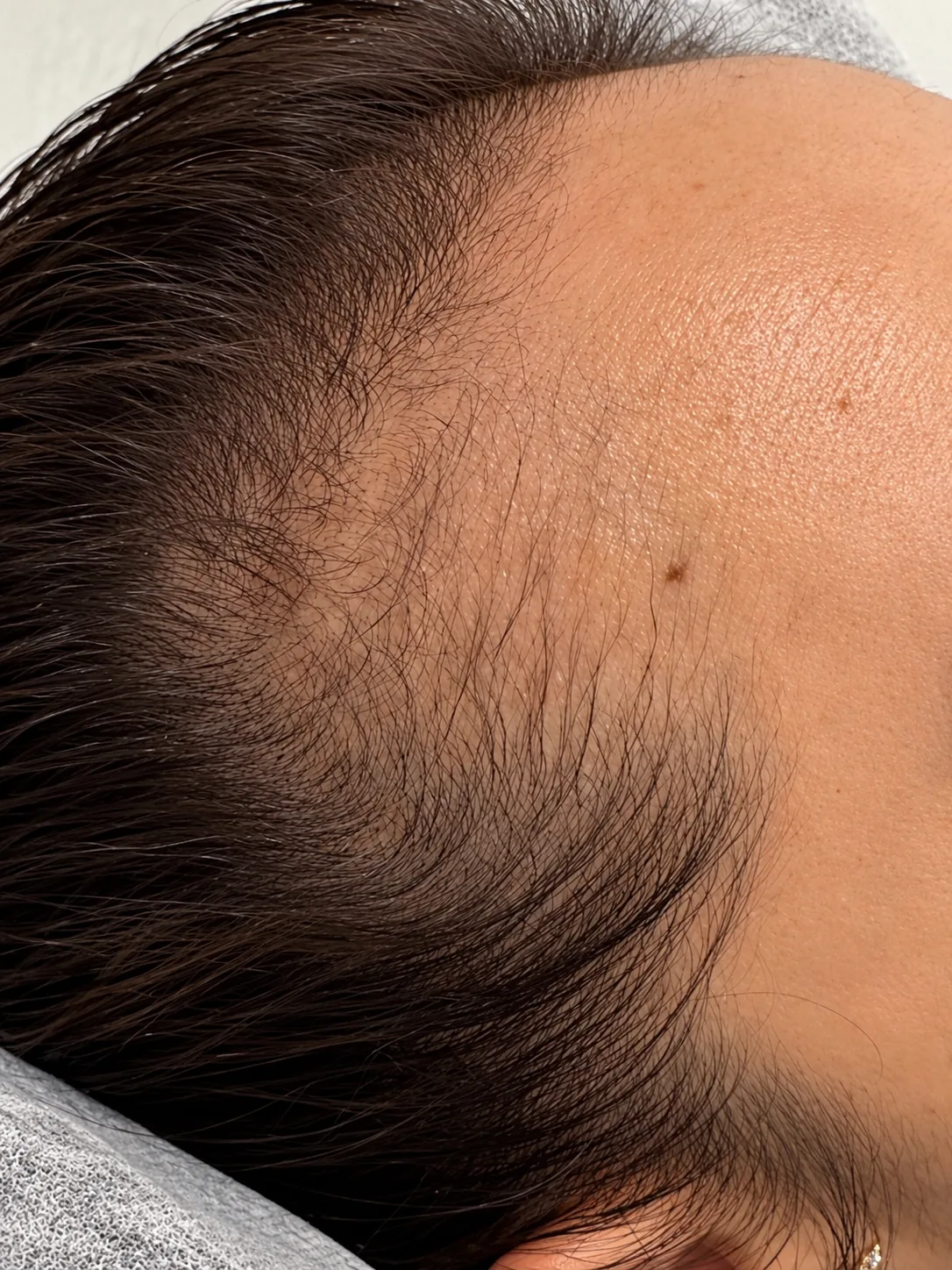
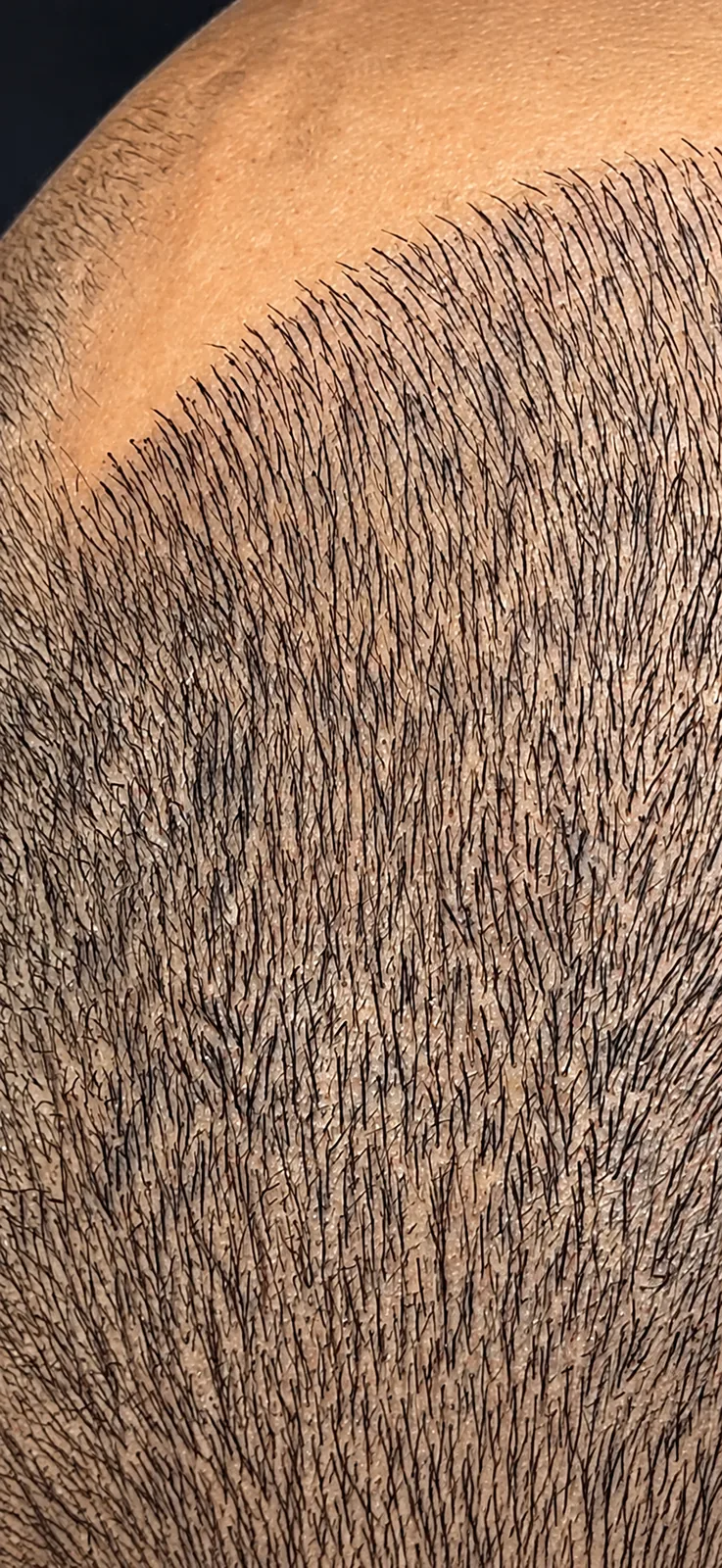
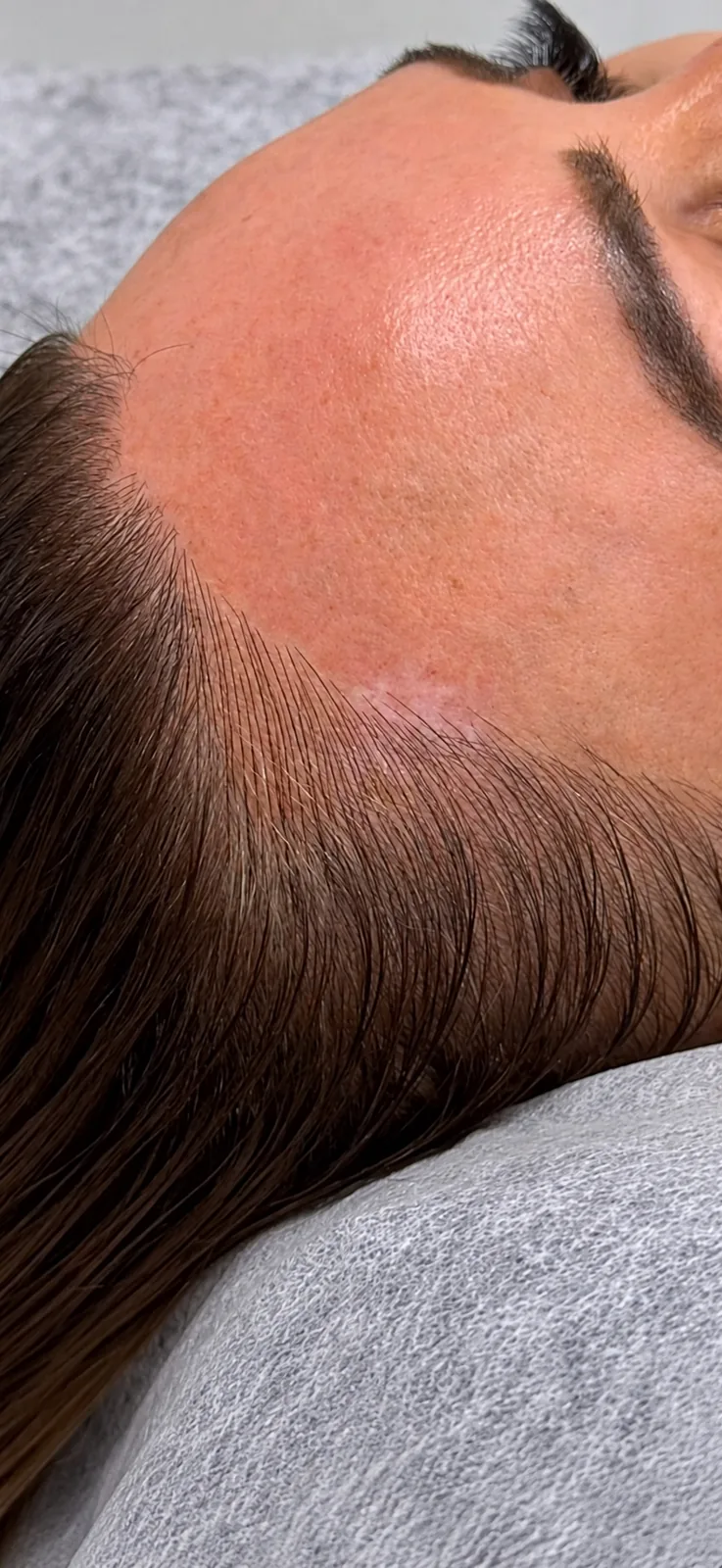
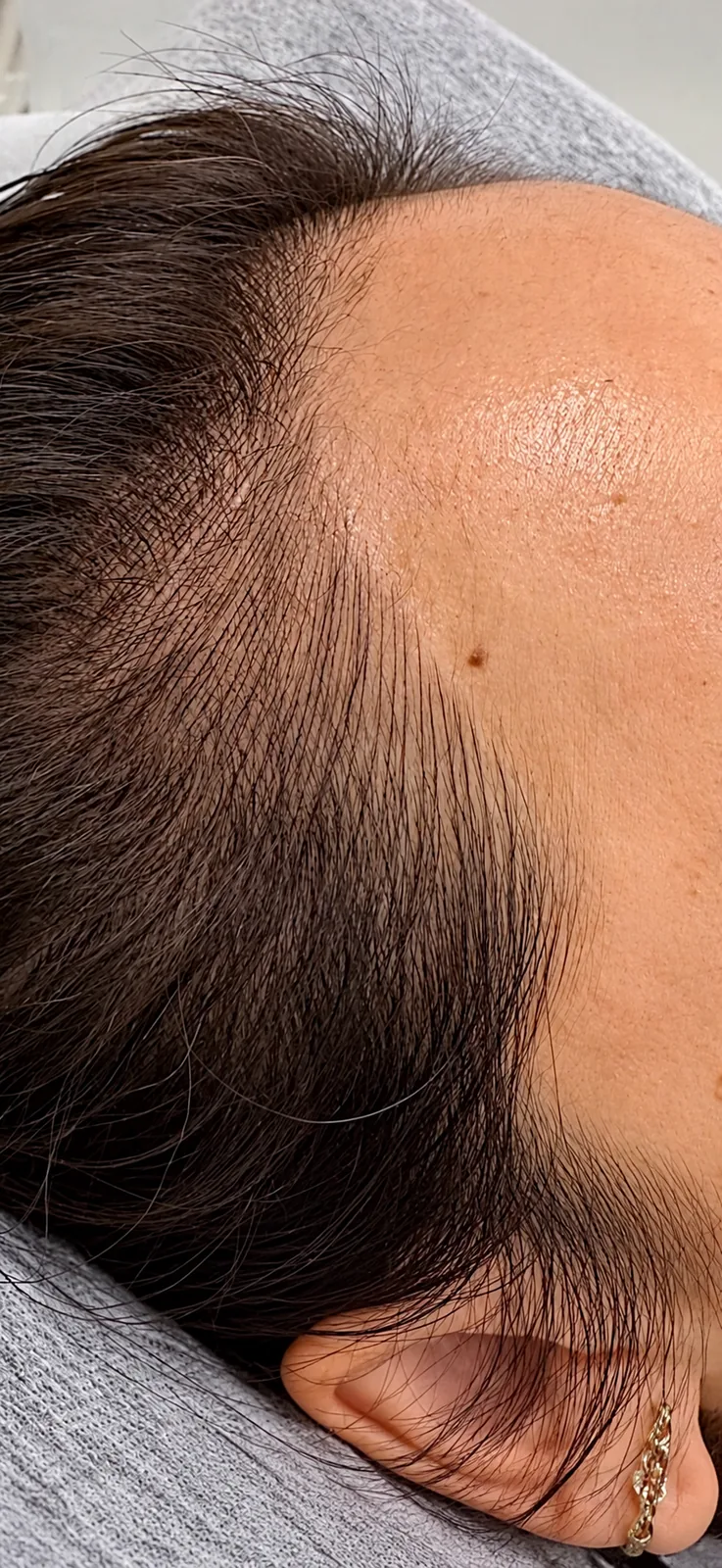
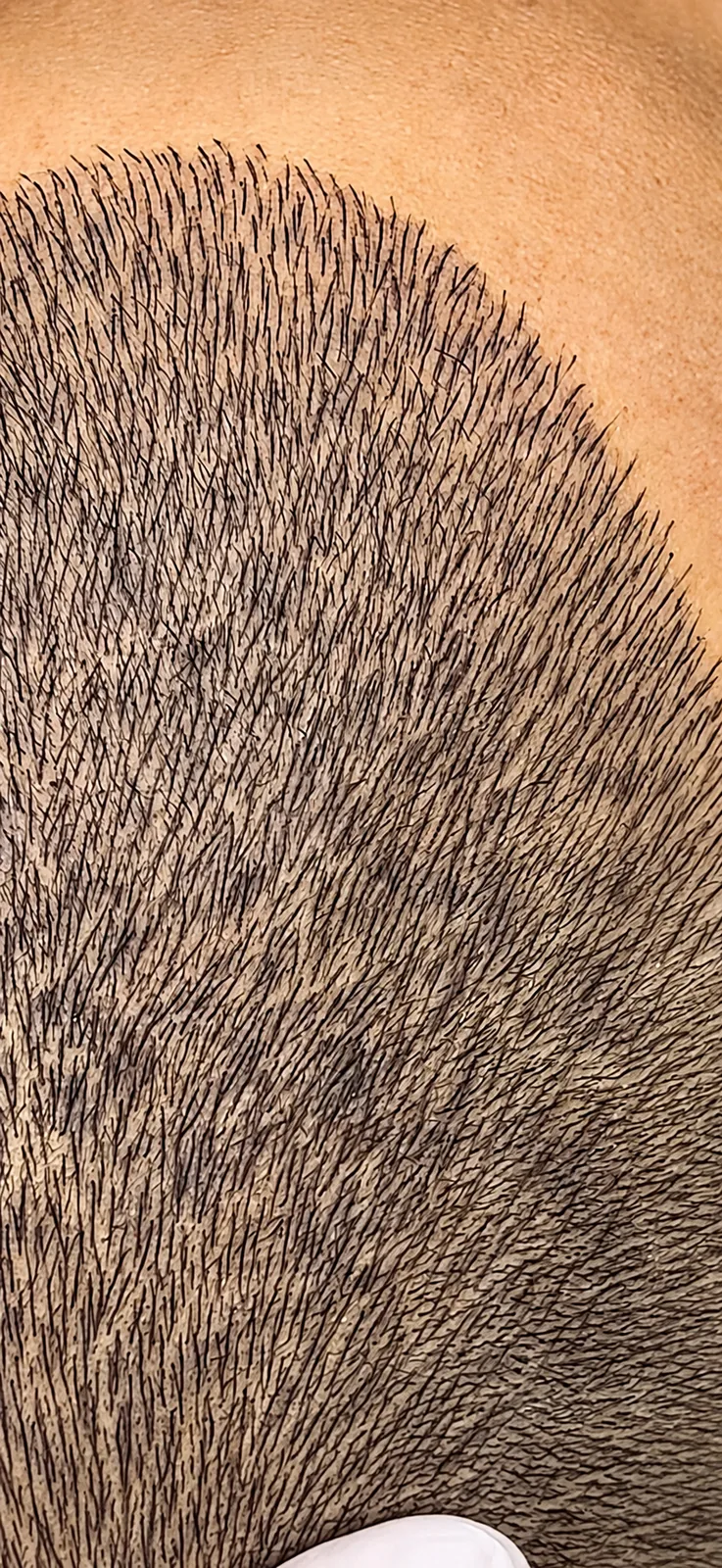
Close up: what hair strokes look like
Hairlines, temples and short-cropped hair, photographed close. Fresh work looks darker and redder than healed work.
Questions and answers
Is scalp microblading the same as scalp micropigmentation (SMP)?
No. Scalp microblading places hair-like strokes by hand and needs existing hair to blend into. SMP uses a machine to place tiny dots that imitate follicles, which suits shaved or very short hair and larger bald areas.
Does it make hair grow or stop hair loss?
No. It is cosmetic camouflage only — it changes how thinning looks, not how hair grows. For the cause of your hair loss, see a dermatologist.
Who is a good candidate?
Women and men who still have hair in and around the area — a thinner hairline, temples or part, or a small scar — and a healthy scalp. For a completely bald area or a shaved look, SMP, a topper or a hair system usually works better.
Does it hurt?
A numbing cream is usually applied first. How it feels differs from person to person — say so at any time if you need a pause.
How many sessions will I need?
Usually a first session and a touch-up once it has healed. Larger areas can be split over more sessions; we tell you at the consultation.
How long does it last?
The strokes fade gradually. Published estimates for scalp strokes are around a year; oily skin, frequent washing and sun shorten it. Touch-ups keep it fresh.
When can I wash my hair and exercise again?
Keep the area dry until we tell you otherwise — published advice ranges from a day or two to about a week, so follow your aftercare sheet. Avoid heavy sweating, steam, swimming and strong sun for the first days.
Can I colour my hair afterwards?
Wait several weeks, until the skin has fully healed. Remember that the strokes keep their colour: if you change your hair colour a lot, or go grey, they can stand out and may need adjusting.
Is scalp microblading safe?
It carries the risks of any pigment in skin: infection, allergic reaction, granulomas, keloids, blurring or colour change, and rarely reactions during an MRI. Sterile technique, the right pigment and following aftercare reduce them. Ask any studio how its tools are sterilised.
Can it be removed or corrected?
Lasers can lighten pigment over several sessions, but complete removal is not guaranteed, and some cosmetic pigments darken under a laser. That is why the design is agreed before anything is placed.
Can I have it during chemotherapy?
Usually not during treatment — ask your oncology team first. While you are in treatment, a wig is the gentler option; HEADS offers cancer patients a free, private wig consultation.
Who does scalp microblading at HEADS?
Ms. Sepideh Farjad, the Persian microblading master who also designs and draws every brow at HEADS Eyebrows. You book your consultation with her, and she does the design and every stroke herself.
What does scalp microblading cost?
Scalp microblading at HEADS costs ₱75,000. The consultation costs ₱500 and is credited in full if you go ahead — that is also where we confirm that strokes are the right option for you.
Thinking about it? Start with a scalp check with Ms. Sepideh Farjad: we look at your hair and skin and tell you honestly whether strokes, a topper, a hair system — or nothing — is right for you. Scalp microblading at HEADS: ₱75,000. Consultation ₱500, credited in full if you go ahead.
Book a consultationSources
What this page is based on (checked 9 October 2026). There are no dedicated clinical studies on scalp microblading; most data come from scalp micropigmentation and eyebrow microblading.
- U.S. FDA — Tattoos & Permanent Makeup: Fact Sheet
- U.S. FDA — Tattoo Removal: Options and Results
- American Academy of Dermatology — Tattoo skin reactions
- American Academy of Dermatology — Laser tattoo removal
- International Society of Hair Restoration Surgery — Micropigmentation of the scalp
- Cleveland Clinic — Scalp micropigmentation
- Rassman et al., Journal of Clinical and Aesthetic Dermatology (2015) — Scalp micropigmentation: a concealer for hair and scalp deformities
- Skin Appendage Disorders (2025) — Eyebrow microblading: science, art and complications
- New Jersey Department of Health — Microblading guidance
- Ro — Microblading for the hairline (health guide)
- Cancer Research UK — Ask the nurses: microblading and cancer treatment
- Department of Health (Philippines) — Code on Sanitation, rules for tattooing and skin-piercing shops